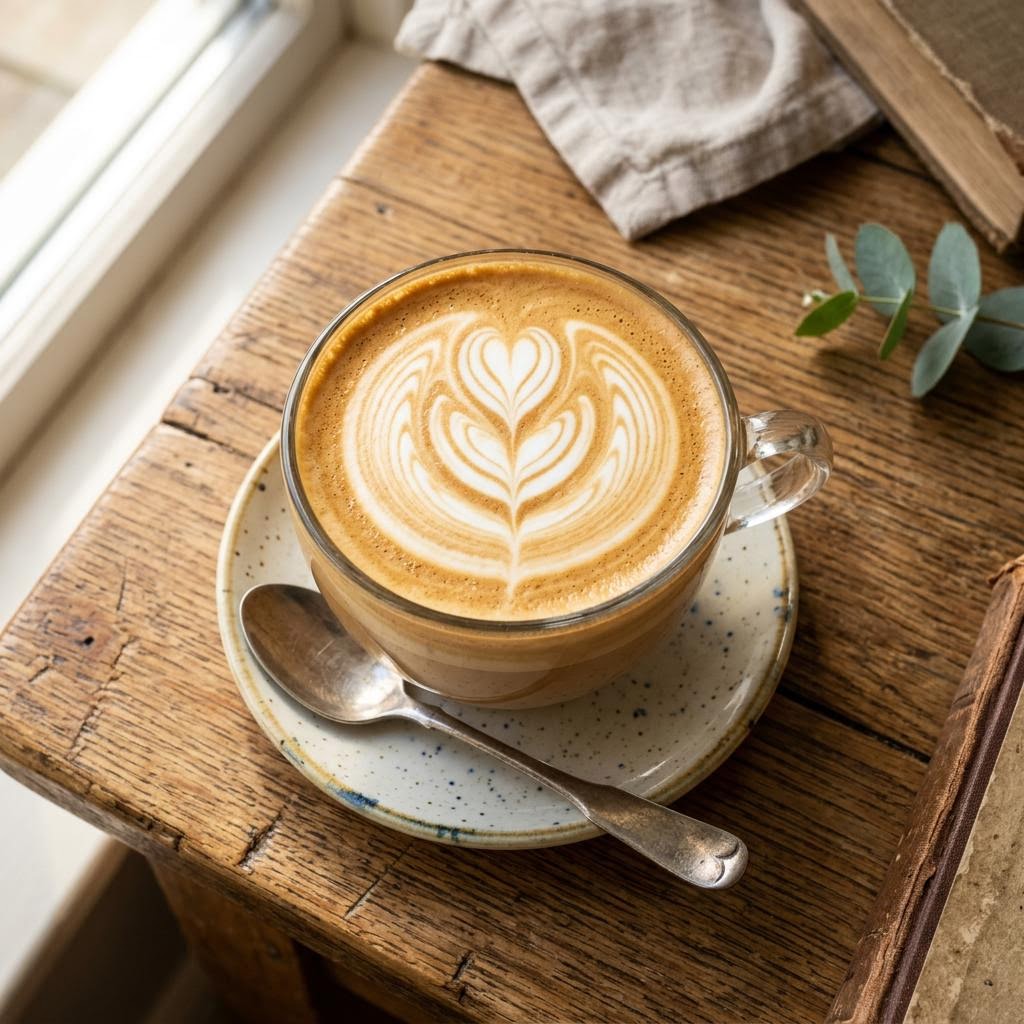
What is in a latte?
A standard café latte has three components in a roughly 1 : 4 ratio of espresso to milk:
- Espresso — 1–2 shots (about 30–60 ml) that provide the coffee flavor and caffeine.
- Steamed milk — the bulk of the drink, gently steamed to a smooth, glossy texture with very little air.
- Microfoam — a thin layer (around 1 cm) of fine, velvety foam on top, which is what latte art is poured into.
Does a latte have espresso in it?
Yes. A traditional latte is always built on espresso — it is an espresso drink by definition. A typical latte contains a single shot (about 68 mg of caffeine), though many cafés and larger sizes use a double shot. The milk changes the taste and texture but does not remove the coffee: the espresso is simply diluted by a larger volume of milk than in a cappuccino.
The main exception is a "latte" made with something other than coffee, such as a matcha latte or chai latte. In those cases the word "latte" just signals "made with lots of steamed milk," and there is no espresso unless you add it.
What does a latte taste like?
A latte tastes mellow, milky and gently sweet. Because milk makes up most of the cup, the espresso reads as a warm, roasted background note rather than a sharp hit. There is a natural sweetness from the lactose in the steamed milk, and the texture is smooth and creamy rather than airy.
This mildness is also why lattes take so well to flavored syrups — vanilla, caramel, hazelnut and seasonal flavors like pumpkin spice all sit comfortably on top of the milky base.
Is a latte served hot or cold?
A latte is traditionally served hot, but the iced latte is now just as common. An iced latte is espresso poured over cold milk and ice, and it tastes lighter and more refreshing than the hot version because the milk is not steamed and sweetened by heat.