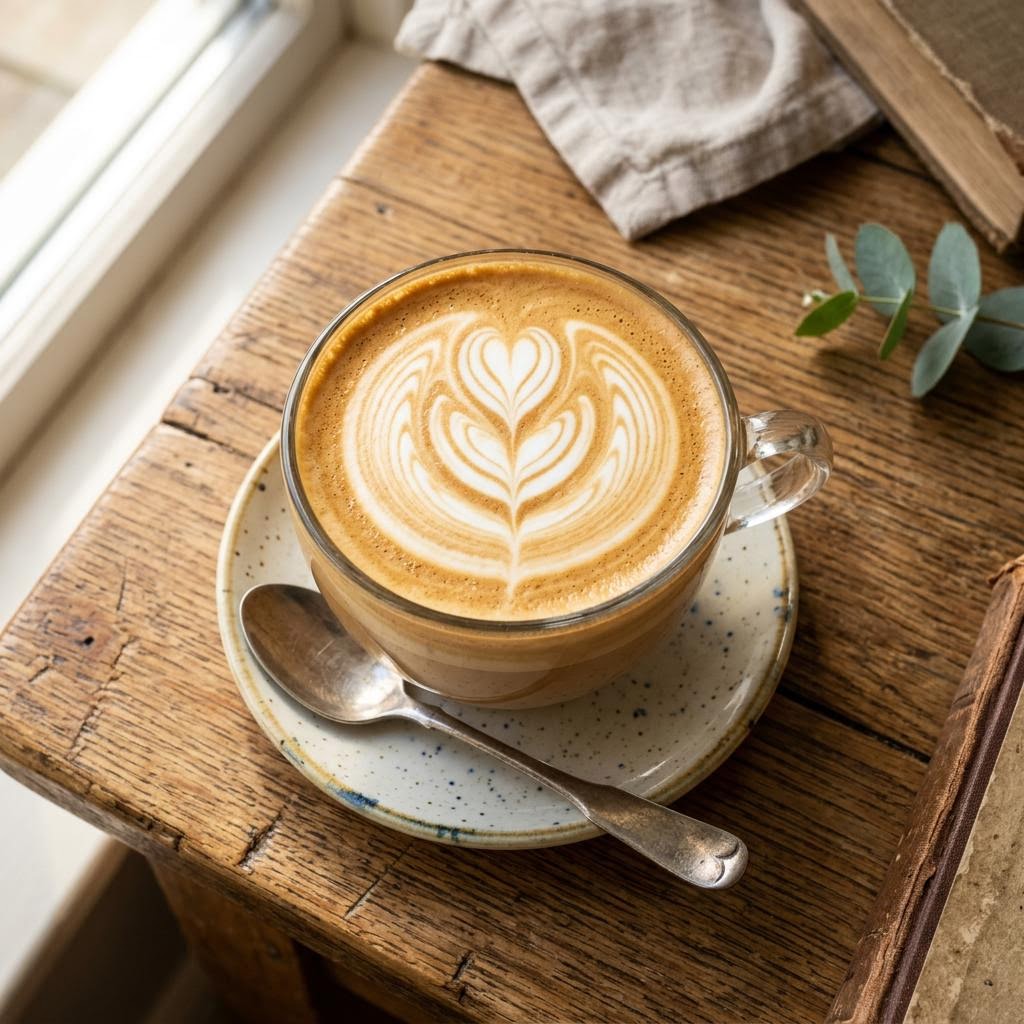

Cappuccino vs Latte

Understanding the difference between these two café classics.

Cappuccino — The perfect balance of espresso, steamed milk, and airy foam.

Cappuccino

VS
Latte — Smooth, milky, and comforting with a gentle coffee flavor.

Latte

A cappuccino uses equal parts espresso, steamed milk, and thick foam (a 1:1:1 ratio) for a stronger, airier drink, while a latte uses one espresso shot with far more steamed milk and a thin foam layer for a creamier, milder drink. Both start from the same espresso base, so the cappuccino vs latte decision comes down to the coffee-to-milk ratio and the steamed milk texture.

The Quick Answer

It depends on your milk preference.

Choose a Cappuccino if you love an airy texture and a stronger espresso punch. Go for a Latte if you prefer a sweeter, creamier, and more mellow coffee experience.

Category Winners

Stronger Taste

Cappuccino

Sweeter

Latte

More Foam

Cappuccino

Best for Beginners

Latte

Head-to-Head Comparison

Feature
Cappuccino
Latte
Espresso Shots
1 shot
1 shot
Steamed Milk
33% of cup
66% of cup
Milk Foam
33% (Thick)
10% (Microfoam)
Caffeine
68 mg
68 mg
Calories (Whole Milk)
~120 kcal
~190 kcal
Typical Size
6 oz
10 oz
Coffee-to-milk ratio
1:1:1 (espresso · milk · foam)
1:3 (espresso · milk)
Texture
Light, airy, frothy
Silky, dense, creamy
Best for
Bold coffee taste, fewer calories
Mild, sweet, flavored drinks

The Anatomy of the Drinks

See exactly how the ratios of espresso, milk, and foam differ inside the cup.

Cappuccino

33% Foam
33% Milk
1 Shot
Microfoam
33%
Steamed Milk
33%
Espresso
1x

Latte

10% Foam
66% Milk
1 Shot
Microfoam
10%
Steamed Milk
66%
Espresso
1x

What Is a Cappuccino? What Is a Latte?

Both are espresso-and-milk drinks — the split of steamed milk to foam is what sets them apart.

Cappuccino with a thick, airy foam cap in a ceramic cup

Cappuccino ratio (1:1:1)

Espresso1 oz
Steamed milk2 oz
Milk foam2 oz

A cappuccino is an espresso drink built from equal parts espresso, steamed milk, and milk foam. The Specialty Coffee Association (SCA) defines the classic cappuccino as a 150–180 ml (5–6 oz) drink with a single espresso shot and a thick foam cap.

Taste: bold, roasty, and airy — the small milk volume lets the espresso flavor stay forward.

Dry vs wet: a dry cappuccino carries more foam and less steamed milk; a wet cappuccino carries less foam and more milk, moving it closer to a latte. Use the chips above to see the ratio shift.

Latte with a thin microfoam layer and latte art in a glass

Latte ratio (1:3)

Espresso1 oz
Steamed milk6 oz
Microfoam~1 cm

One 30 ml (1 oz) shot to roughly 180 ml (6 oz) steamed milk.

A latte, also called a caffè latte, is an espresso drink built from one or two espresso shots and a large volume of steamed milk, finished with a thin foam layer.

Taste: mild, sweet, and creamy — the high milk volume draws out the milk's natural lactose sweetness during steaming.

Flavored drinks: the large milk base carries syrups, spices, and sauces evenly, which is why the vanilla latte, pumpkin spice latte, and oat milk latte all live in the latte category.

The 5 Key Differences

There are 5 key differences between a cappuccino and a latte: milk-to-foam ratio, texture, strength, size, and calories.

1.Milk-to-foam ratio

A cappuccino splits milk and foam evenly at roughly 1:1. A latte pours mostly steamed milk with only a thin foam cap.

Cappuccino foam share~50%
Latte foam share~12%

Cappuccino Summary

Pros

  • Stronger coffee flavor shines through
  • Luxurious, airy foam texture
  • Lower in calories and milk fat
  • A true Italian classic

Cons

  • Less volume for the price
  • Not sweet naturally
  • Foam can dissipate quickly

Latte Summary

Pros

  • Sweeter, more comforting flavor
  • Beautiful latte art
  • Takes well to flavor syrups
  • Larger drink to sip longer

Cons

  • Milk can overpower the coffee flavor
  • Higher in calories
  • Can feel heavy or overly filling

Detailed Analysis

Taste & Flavor Profile

The most significant difference you'll notice between these two is the taste. The Cappuccino offers a profile that is rich, bold espresso flavor softened by creamy milk and airy foam.. Because of its specific milk ratio, the espresso flavor shines through boldly.

Conversely, the Latte is mellow and sweet, with milk dominating the espresso.. If you prefer a sweeter, more comforting drink, the Latte is likely the better choice for your palate.

Texture & Mouthfeel

Texture is where coffee craftsmanship truly shows. The Cappuccino is defined by its light, airy, and velvety texture, creating a thick layer of aerated foam.

The Latte provides a contrast with its smooth, creamy, and fluid mouthfeel, thanks to its 10% foam ratio. It feels heavier and creamier on the tongue.

"Choosing between a Cappuccino and a Latte isn't about which is objectively better. It's about what your palate wants in that specific moment—comfort or intensity."

Caffeine: Which Is Stronger?

A cappuccino and a latte hold the same caffeine when made with the same number of espresso shots, about 68 mg for a single shot.

Espresso shots
Drink
68mg

A single-shot cappuccino holds about 68 mg of caffeine — milk volume changes taste, not caffeine content.

Same espresso, same caffeine. Both drinks start from one espresso shot in their classic form. A single normale shot delivers roughly 63–75 mg of caffeine, commonly cited near 68 mg. A cappuccino tastes stronger only because less milk dilutes the espresso flavor.

Single vs double shot. A double shot raises caffeine to about 136 mg in either drink. A ristretto pulls a shorter, more concentrated espresso with slightly less caffeine but a punchier taste. Coffee experts such as James Hoffmann and Scott Rao note that espresso extraction time and grind settings change strength and caffeine more than the milk ever does.

Calories & Nutrition

A cappuccino holds fewer calories than a latte at the same milk type because it uses less milk. Milk choice changes the numbers the most.

Cappuccino

180 ml / 6 oz

120kcal
Protein 7 gSugar 8 g

Latte

300 ml / 10 oz

190kcal
Protein 11 gSugar 14 g

A whole-milk cappuccino saves about 70 kcal against a whole-milk latte. See the full breakdown in the calories and nutrition guide.

Calories by milk type for a cappuccino and a latte
Milk type Cappuccino (180 ml / 6 oz) Latte (300 ml / 10 oz)
Whole milk ~120 kcal ~190 kcal
Skim milk ~80 kcal ~130 kcal
Oat milk ~110 kcal ~170 kcal
Soy milk ~100 kcal ~150 kcal
Almond milk ~60 kcal ~90 kcal

Sugar and protein. A whole-milk latte delivers about 11 g protein and 14 g natural sugar. A whole-milk cappuccino delivers about 7 g protein and 8 g natural sugar. Soy milk keeps protein high near 8 g; almond milk drops protein near 2 g.

For weight loss, choose a cappuccino for fewer calories, or choose a skim or almond milk version of either drink to cut calories further. A whole-milk cappuccino saves about 70 kcal against a whole-milk latte.

Milk Alternatives

Milk alternatives change both taste and foam. There are 3 popular milk alternatives for espresso drinks: soy, almond, and oat.

Oat milk

Froth quality 5/5

Steams into a thick, stable microfoam — great for both drinks and drives the oat milk latte trend.

Soy milk

Froth quality 4/5

Froths well but can split under high heat, so steam it cooler.

Almond milk

Froth quality 2/5

Thinner, less stable foam — better in a latte than a foam-heavy cappuccino.

Temperature control matters most for plant milks — target around 55–60 °C (130–140 °F).

How to Make a Cappuccino at Home

Pull one espresso shot, steam milk to a thick microfoam, and combine in a 1:1:1 ratio. Tap each step to fill the cup.

3 tools
0/5 steps

Equipment you need

Four tools: a home espresso machine such as the Breville Barista Express, a coffee grinder such as the Baratza Sette 270, a milk steaming pitcher, and fresh beans. A milk frother such as the Nespresso Aeroccino replaces the steam wand for a simpler setup. For the exact espresso-milk-foam ratios and recipes, see the dedicated guide.

How to Make a Latte at Home

Pull one or two espresso shots, steam milk to a silky microfoam, and pour a 1:3 coffee-to-milk ratio.

2 tools
0/4 steps

Latte art basics

Latte art works on a latte because the thin microfoam blends with the espresso surface; a cappuccino's thick foam sits too stiff for detailed art. Pour from height to sink the milk, then drop the pitcher close to the surface to draw a heart or rosetta.

Iced Cappuccino vs Iced Latte

Iced Latte

Pours espresso over cold milk and ice for a smooth, cold drink. The iced cappuccino vs iced latte difference mirrors the hot versions, minus most of the foam.

Iced Cappuccino

Keeps a layer of cold foam on top, so it stays airier and is less common on café menus. Cold brew steeps grounds in cold water for 12–24 hours, while an iced latte uses hot-pulled espresso over ice; blended fans should compare the frappuccino instead.

Cappuccino vs Latte vs Flat White

A flat white lands between the two: a double espresso shot with a small volume of steamed milk and fine microfoam — stronger than a latte, smoother than a cappuccino.

Cappuccino

33% Foam
33% Milk
1 Shot
Microfoam
33%
Steamed Milk
33%
Espresso
1x

Flat White

10% Foam
60% Milk
2 Shots
Microfoam
10%
Steamed Milk
60%
Espresso
2x

Latte

10% Foam
66% Milk
1 Shot
Microfoam
10%
Steamed Milk
66%
Espresso
1x

The flat white vs latte debate comes down to size and foam — a flat white runs smaller at 150–160 ml (5–5.5 oz) with less foam. Compare all three in the flat white vs latte vs cappuccino breakdown, or read the head-to-head cappuccino vs flat white.

A Brief History

Both drinks grew from Italian coffee culture, then spread worldwide through café menus.

  1. 1

    Capuchin origin

    The cappuccino takes its name from the brown robes of Capuchin friars in Italy.

  2. 2

    Espresso machines

    Italian cafés standardized the 1:1:1 cappuccino as espresso machines spread in the early 20th century.

  3. 3

    US café latte

    The caffè latte means milk coffee in Italian; the modern café latte grew popular through US West Coast cafés from the 1950s–1980s.

  4. 4

    Third wave

    Roasters such as Blue Bottle and Intelligentsia refined the latte with better milk steaming and single-origin espresso.

Which Should You Order?

Choose the drink that matches the coffee flavor and milk level you want.

Answer three quick questions to highlight your match:

How do you want the coffee flavor?
What texture do you prefer?
How big a drink do you want?

Pick a Cappuccino if you…

  • Prefer a stronger espresso taste
  • Prefer an airy, frothy texture
  • Want fewer calories (about 120 kcal)
  • Enjoy a short morning espresso ritual

Pick a Latte if you…

  • Prefer a creamier, sweeter cup
  • Want a larger 240–300 ml (8–10 oz) drink
  • Add syrups or seasonal flavors
  • Order coffee as a beginner and want a mild taste

Frequently Asked Questions

Which has more caffeine, a cappuccino or a latte?

They generally have the exact same amount of caffeine. Both are traditionally made with a single shot of espresso (about 68mg of caffeine). The difference in size comes entirely from the amount of milk and foam used.

Is a cappuccino sweeter than a latte?

No, a latte is naturally sweeter. Milk contains lactose, a natural sugar. Because a latte has significantly more steamed milk than a cappuccino, it tastes sweeter even without added sugar or syrups.

Can you do latte art on a cappuccino?

Traditional cappuccinos have a thick layer of stiff foam, making delicate latte art difficult. However, many modern specialty cafes serve a "third-wave" cappuccino with microfoam, allowing for art, though it still has a thicker texture than a latte.

Which is healthier?

A cappuccino is generally healthier if you are watching calories, as it contains less milk. A standard whole-milk cappuccino has about 120 calories, compared to a latte's 190 calories.

Is a cappuccino or latte better for beginners?

A latte is better for beginners. The higher milk ratio softens the espresso for a milder, creamier first cup.

Can you make a cappuccino or latte without an espresso machine?

Yes, a milk frother such as the Nespresso Aeroccino and a strong stovetop or instant coffee base make a home cappuccino or latte without a full espresso machine.

Does a latte have more milk than a cappuccino?

Yes, a latte has more milk than a cappuccino. A latte uses about 180 ml (6 oz) steamed milk against roughly 60 ml (2 oz) in a cappuccino.

The Bottom Line

A cappuccino and a latte start from the same espresso shot, so the cappuccino vs latte choice comes down to milk and foam. A cappuccino gives equal parts espresso, steamed milk, and thick foam for a stronger, airier, lower-calorie cup. A latte gives one shot with more steamed milk and a thin foam layer for a creamier, sweeter, larger cup.

Pick a cappuccino for bold coffee taste, or pick a latte for a milky, mild drink.

Last updated: July 2026

Explore the Whole Topic

Everything about cappuccinos, lattes and their espresso cousins — definitions, comparisons, caffeine, calories and recipes.

Compare Another Pair

Keep exploring the world of espresso drinks.

Build Your Comparison

Select any two coffees below to generate a detailed side-by-side analysis of their taste, texture, and caffeine.

VS